Program Requirements
The Bacteriology M.S. program is designed to give you an advanced education focused on microbiology. This is done through curricular and other requirements.
All requirements can be found on the Bacteriology M.S. page in the UW – Madison Guide.
Required Courses
The following courses (or equivalent) are required for completion of the M.S. degree for both the coursework and research tracks, and may be fulfilled by courses taken prior to entrance to the M.S. program or as part of the M.S. program.
| MICROBIO 303 (Online in Summer) | Biology of Microorganisms | 3 |
| MICROBIO 526 | Physiology of Microorganisms | 3 |
| MICROBIO 470 | Microbial Genetics & Molecular Machines | 3 |
| BIOCHEM 501 (In Person and Online) | Introduction to Biochemistry | 3 |
| MICROBIO 812 | Masters Degree Seminar | 1 |
Elective Courses
| Code | Title | Credits |
|---|---|---|
| MICROBIO 520 | Planetary Microbiology: What Life Here Tells Us About Life Out There | 3 |
| MICROBIO/SOIL SCI 523 | Soil Microbiology and Biochemistry | 3 |
| MICROBIO 525 | Field Studies of Planetary Microbiology and Life in the Universe | 3 |
| MICROBIO/ONCOLOGY 545 (Not Grad 50% – Online) | Topics in Biotechnology | 1 |
| MICROBIO/BIOCHEM/GENETICS 612 | Prokaryotic Molecular Biology | 3 |
| MICROBIO 626 | Microbial and Cellular Metabolomics | 3 |
| MICROBIO 657 | Bioinformatics for Microbiologists | 3 |
| MICROBIO/BMOLCHEM 668 | Microbiology at Atomic Resolution | 3 |
| MICROBIO 710 | Microbial Symbiosis | 3 |
| M M & I/PATH-BIO 528 (Not Grad 50%) | Immunology | 3 |
| M M & I 554 | Emerging Infectious Diseases and Bioterrorism | 2 |
| M M & I/BIOCHEM 575 | Biology of Viruses | 2 |
| M M & I 740 | Mechanisms of Microbial Pathogenesis | 3 |
| M M & I/PATH-BIO 750 | Host-Parasite Relationships in Vertebrate Viral Disease | 3 |
| M M & I 760 | Quantitative Systems Biology and Disease | 3 |
| GENETICS 525 | Epigenetics | 3 |
| GENETICS/MD GENET 565 | Human Genetics | 3 |
| GENETICS/ENTOM/ZOOLOGY 624 | Molecular Ecology | 3 |
| GENETICS/CHEM 626 | Genomic Science | 2 |
| GENETICS 633 | Population Genetics | 3 |
| GENETICS/MD GENET/POP HLTH 636 | Public Health Genomics | 1 |
| GENETICS/BOTANY/M M & I/PL PATH 655 | Biology and Genetics of Fungi | 3 |
| GENETICS/AN SCI/POP HLTH 849 | Genomic Epidemiology | 2 |
| GENETICS 885 | Advanced Genomic and Proteomic Analysis | 3 |
| BIOCHEM/NUTR SCI 510 | Nutritional Biochemistry and Metabolism | 3 |
| BIOCHEM/NUTR SCI 560 | Principles of Human Disease and Biotechnology | 2 |
| BIOCHEM 601 | Protein and Enzyme Structure and Function | 2 |
| BIOCHEM/B M I/BMOLCHEM/MATH 609 | Mathematical Methods for Systems Biology | 3 |
| BIOCHEM/GENETICS/MD GENET 620 | Eukaryotic Molecular Biology | 3 |
| BIOCHEM/BOTANY 621 | Plant Biochemistry | 3 |
| CHEM 665 | Biophysical Chemistry | 4 |
| PUBLHLTH 710 (Online) | Introduction to Global Health: History, Current Issues, and Health Statistics | 2 |
| PUBLHLTH 711 (Online) | Global Public Health and Healthcare Systems: Organizations, Governance, Financing, and Workforce | 2 |
| PUBLHLTH 712 (Online) | Global Health: Infectious Diseases, One Health, and Prevention Strategies | 2 |
| BOTANY 330 | Algae | 3 |
| BOTANY/PL PATH 332 | Fungi | 4 |
| BOTANY/PL PATH 333 | Biology of the Fungi | 2 |
| BOTANY/ANTHRO/ZOOLOGY 410 (Online in Summer) | Evolutionary Biology | 3 |
| PL PATH 300 | Introduction to Plant Pathology | 4 |
| PL PATH 315 | Plant Microbiomes | 4 |
| PL PATH/BOTANY/ENTOM 505 | Plant-Microbe Interactions: Molecular and Ecological Aspects | 3 |
| PL PATH/ONCOLOGY/MM&I 640 | General Virology-Multiplication of Viruses | 3 |
| ONCOLOGY 675 | Advanced or Special Topics in Cancer Research | 1-3 |
| LSC 560 | Scientific Writing | 3 |
| LSC 561 | Writing Science for the Public | 3 |
| SOIL SCI 585 (Online) | Using R for Soil and Environmental Sciences | 3 |
| STAT/ B M I 541 (Online) | Introduction to Biostatistics | 3 |
| STAT/F&W ECOL/HORT 571 | Statistical Methods for Bioscience I | 4 |
| ZOOLOGY/ENTOM 371 | Medical Entomology: Biology of Vector and Vector-Borne Diseases | 3 |
| AN SCI/DY SCI 320 | Animal Health and Disease | 3 |
| AN SCI 420 | Microbiomes of Animal Systems | 3 |
| MED HIST/C&E SOC/PHILOS 565 | The Ethics of Modern Biotechnology | 3 |
| POP HLTH 801 | Epidemiology of Infectious Diseases | 2 |
| Code | Title | Credits |
|---|---|---|
| MICROBIO 304 | Biology of Microorganisms Laboratory | 2 |
| MICROBIO 527 | Advanced Laboratory Techniques in Microbiology | 2 |
| MICROBIO 551 | Capstone Research Project in Microbiology | 2 |
| Code | Title | Credits |
|---|---|---|
| BOTANY/F&W ECOL/ZOOLOGY 460 (Online in Summer) | General Ecology | 4 |
| DERM 602 | Advances in Skin Biology and Skin Diseases | 2 |
| GENETICS 466 (Not Grad 50%-Online in Summer) | Principles of Genetics | 3 |
| GENETICS 662 (Not Grad 50%-Online in Summer) | Cancer Genetics | 3 |
| NUTR SCI/POP HLTH 621 | Introduction to Nutritional Epidemiology | 1 |
| PATH 404 (Not Grad 50%) | Pathophysiologic Principles of Human Diseases | 3 |
| POP HLTH/ENVIR ST 739 | Climate Change, Human and Planetary Health | 2 |
| ZOOLOGY/PSYCH 523 (Not Grad 50%-Online in Summer) | Neurobiology | 3 |
Courses from the departments of Genetics, Biochemistry, Bacteriology, and MM&I are generally accepted for electives. If the course you wish to take is not on the pre-approved list, be sure to request approval from your advisor (coursework track) or research advisory committee (research track).
Prior Coursework Policy
Prior coursework policy from UW – Madison Graduate School must be followed. The program has additional policies listed below.
Graduate Credits Earned at Other Institutions
With permission of the program advisor, no more than 1/3 of coursework (7 credits for the Coursework Pathway or 3 credits for the Research Pathway) from another institution may be applied toward degree requirements. The course must focus on central processes of microorganisms and be outside the core requirements of the Bacteriology MS Program. The student must have earned a B or better in the course. Decisions are made by the MS program advisor. Credits earned ten or more years prior to admission to a master’s degree are not allowed to satisfy requirements.
Undergraduate Credits Earned at UW–Madison or Other Institutions
With permission of the program advisor, no more than 1/3 of coursework (7 credits for the Coursework Pathway or 3 credits for the Research Pathway) from UW–Madison or another institution may be applied toward degree requirements. The course must focus on central processes of microorganisms and be outside the core requirements of the Bacteriology MS Program. The student must have earned a B or better in the course. These credits are not allowed to count toward the 50% graduate coursework minimum unless numbered 700 or above from UW–Madison. Decisions are made by the MS program advisor. Credits earned ten or more years prior to admission to a master’s degree are not allowed to satisfy requirements.
Credits Earned as a Professional Student at UW–Madison (Law, Medicine, Pharmacy, and Veterinary careers)
Refer to the Graduate School: Transfer Credits for Prior Coursework policy.
Credits Earned as a University Special student at UW–Madison
With permission of the program advisor, up to 9 credits of courses numbered 300 or above may be applied toward degree requirements. The course must focus on central processes of microorganisms, and the student must have earned a B or better in the course. These credits are not allowed to count toward the 50% graduate coursework minimum unless numbered 700 or above or are taken to meet the requirements of a capstone certificate and has the “Grad 50%” attribute from UW–Madison. Decisions are made by the MS program advisor. Credits earned ten or more years prior to admission to a master’s degree are not allowed to satisfy requirements.
*Students can combine undergraduate transfer credits and special student transfer credits for a maximum of 9 credits.
Two Year Plan
Research Track
Year 1
Advising and Orientation: Week before classes begin.
Orientation Advising Meeting and Form: September 15 for fall admits; January 31 for spring admits. Form must be completed by the student to include the first semester’s courses.
Register for Classes: By the first day of class. All classes not on the pre-approved list must be approved by the thesis advisor in writing. Requests for approvals must be made at the time of class registration.
Ethics Workshop: Complete during Microbio 812 course (offered Fall only).
Establish a Research Advisory Committee: December 1 for fall admits; May 1 for spring admits
Email Research Advisory Committee to Set Up Your Committee Meeting Date: December 15 for fall admits; May 15 for spring admits
Research and Coursework Proposal and Committee Meeting: March 1 for fall admits; August 1 for spring admits
Complete Coursework Certification Form: March 1 for fall admits; August 1 for spring admits
Complete IDP (optional)
Year 2
Register for Classes: By the first day of class. All classes not on the pre-approved list must be approved by the thesis advisor in writing. Requests for approvals must be made at the time of class registration.
Complete Coursework Certification Form: September 15 for fall graduates; January 31 for spring graduates
Work with your Research Advisory Committee to schedule the date of the Thesis Defense: beginning of the semester in which you plan to graduate
Send an email notification with the scheduled date of the Thesis Defense to the Bacteriology Program Manager: at least three weeks prior to defense date
Research Thesis and Defense: Before the degree deadline.
Complete Exit Interview with Program Coordinator: December 1 for fall graduates; May 1 for spring graduates
Coursework Track
Year 1
Advising and Orientation: Week before classes begin.
Orientation Advising Meeting and Form: September 15 for fall admits; January 31 for spring admits. Form must be completed by the student to include the first semester’s courses.
Register for Classes: By the first day of class. All classes not on the pre-approved list must be approved by the program director in writing. Requests for approvals must be made at the time of class registration.
Ethics Workshop: Complete during Microbio 812 course (offered Fall only)
Advisor Check in Email: Prior to each semester’s enrollment, IF any non-pre-approved courses are selected.
Advisor Check in Meeting: March 1 for fall admits; November 1 for spring admits.
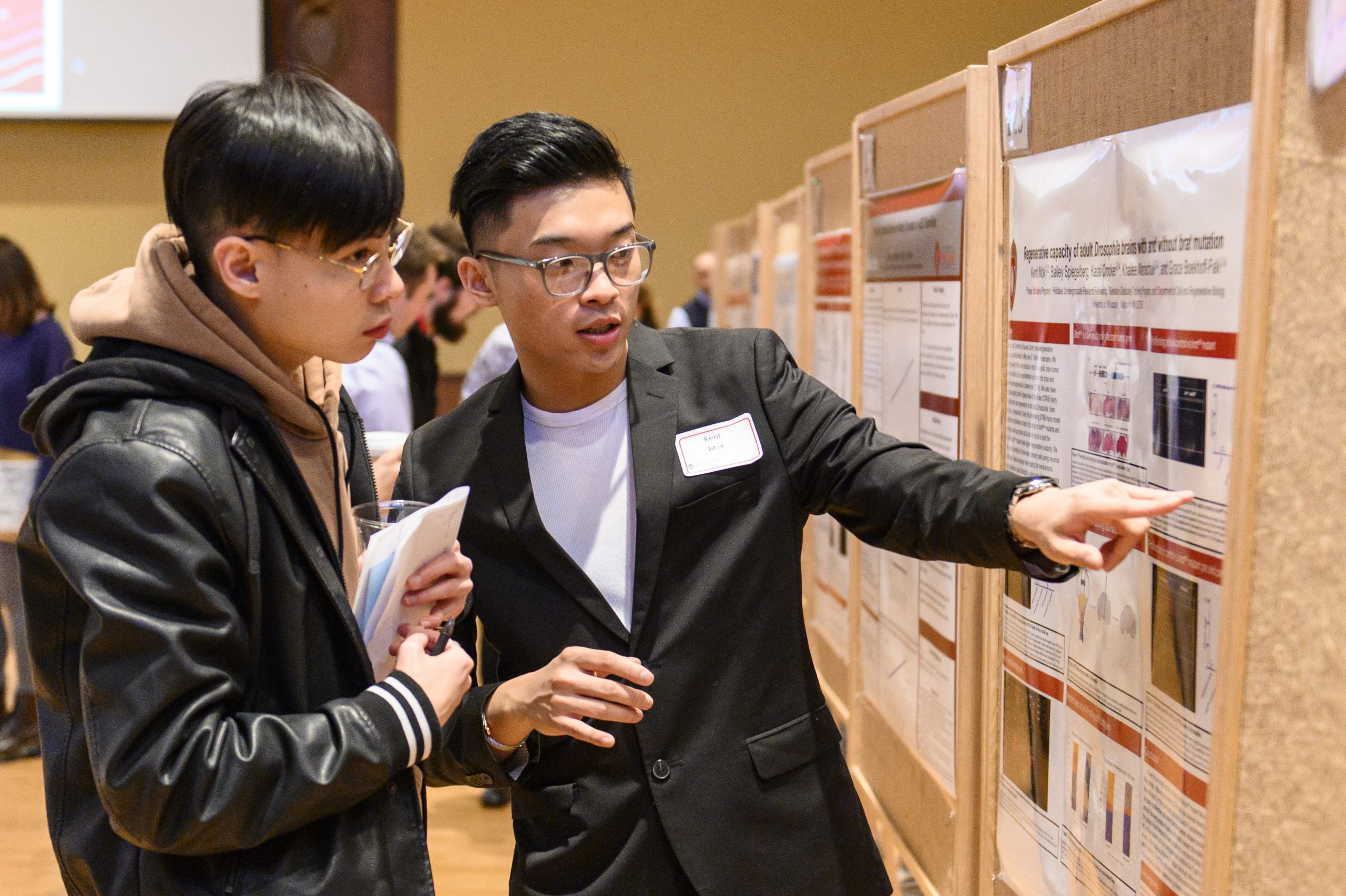
Seminar Assessment/Research Poster: March 1 for fall admits; November 1 for spring admits. Students must notify the program of their seminar of choice at least 1 week prior to the seminar.
Complete IDP (optional)
Year 2
Register for Classes: By the first day of class. All classes not on the pre-approved list must be approved by the program director in writing. Requests for approvals must be made at the time of class registration.
Complete Coursework Certification Form and Let the Program Coordinator Know your Plans for Graduation: September 15 for fall graduates; January 31 for spring graduates
Advisor Check in Meeting: March 1 for fall admits; November 1 for spring admits.